
Healthy, resilient hair begins with the building blocks the body uses to create it: amino acids.
Amino acids combine to form proteins, including keratin, the primary structural protein found in the hair shaft. When the diet provides adequate protein and essential nutrients, the body has the raw materials it needs to support normal hair formation at the follicle. Topically, amino-acid-rich botanical proteins and conditioning ingredients can help reinforce weakened areas of the hair fiber, improve elasticity, reduce friction, and protect against breakage.
The most effective natural strategy is therefore a two-part approach:
- Nourish the hair follicle from within through a protein-rich, nutrient-dense diet.
- Protect and strengthen the existing hair fiber with targeted topical care.
Understanding the Role of Amino Acids in Hair
Each strand of hair is primarily composed of keratin—a strong, fibrous protein made from chains of amino acids. Sulfur-containing amino acids are especially important because they contribute to the bonds that help give keratin its strength and structural stability. Research identifies cysteine and methionine as important sulfur-containing amino acids involved in protein structure, while adequate dietary protein supplies the broader range of amino acids needed throughout the body.
Hair can become more vulnerable to breakage when it is repeatedly exposed to:
- Hair color and lightening services
- Chemical straightening or permanent waving
- Excessive heat styling
- UV exposure
- Aggressive brushing
- Environmental dryness
- Frequent tension or friction
- Inadequate protein or nutrient intake
Once hair emerges from the scalp, the visible fiber is no longer living tissue. This means damaged hair cannot biologically heal itself in the same way skin can. However, carefully selected conditioners, botanical proteins, amino acids, oils, and protective polymers can improve the condition of the fiber, reinforce weakened areas, reduce protein loss, and help prevent further damage.
Key Amino Acids for Stronger, Healthier-Looking Hair
1. Cysteine and Cystine: Structural Strength
Cysteine is a sulfur-containing amino acid and one of the most important amino acids associated with keratin structure. Two cysteine molecules can join to form cystine and create strong disulfide bonds within the hair.
These bonds contribute to the hair’s:
- Strength
- Shape
- Elastic behavior
- Resistance to mechanical stress
- Structural integrity
Hair keratins are known for their relatively high cysteine content, which helps explain why sulfur bonds are so important to the strength and shape of the hair fiber.
Natural dietary sources include:
- Eggs
- Poultry
- Fish
- Beef
- Yogurt
- Cottage cheese
- Lentils
- Chickpeas
- Oats
- Sunflower seeds
- Sesame seeds
- Broccoli
- Brussels sprouts
The body can produce cysteine under normal conditions, but its production depends partly on having sufficient methionine and other supporting nutrients available.
2. Methionine: A Sulfur-Bearing Essential Amino Acid
Methionine is an essential amino acid, meaning the body must obtain it through food. It can also contribute sulfur that the body uses in the production of cysteine.
Methionine supports normal protein synthesis and helps provide the sulfur-containing components needed to form structural proteins. Because hair is built from keratin, a diet that consistently supplies adequate methionine and total protein supports the body’s natural hair-production process.
Natural dietary sources include:
- Eggs
- Salmon
- Tuna
- Turkey
- Chicken
- Beef
- Brazil nuts
- Sesame seeds
- Tofu
- Quinoa
- Beans
- Whole grains
3. Lysine: Protein Formation and Nutrient Utilization
Lysine is another essential amino acid that must come from the diet. It participates in protein synthesis and supports numerous structural and metabolic processes.
Lysine has also been studied in relation to hair shedding, particularly where inadequate iron status or poor nutrition may be involved. However, amino-acid or mineral supplements should not be used indiscriminately. Excessive supplementation may be unhelpful and, in some circumstances, may contribute to health problems or hair loss.
Natural dietary sources include:
- Fish
- Poultry
- Lean meat
- Eggs
- Greek yogurt
- Cottage cheese
- Soybeans
- Tempeh
- Lentils
- Black beans
- Quinoa
- Pumpkin seeds
4. Glycine: A Supportive Structural Amino Acid
Glycine is used throughout the body in the formation of proteins and connective tissues. Although hair is primarily keratin rather than collagen, glycine remains part of the broader amino-acid pool the body uses for tissue maintenance and protein production.
Natural dietary sources include:
- Meat
- Fish
- Poultry
- Bone broth
- Gelatin
- Legumes
- Soy products
- Dairy products
- Seeds
The body can make glycine, but a balanced diet helps ensure adequate overall amino-acid availability.
5. Proline: Structural Support
Proline is commonly associated with collagen and connective-tissue structure. It also contributes to the body’s total protein-building resources and may help support the tissues surrounding the follicle as part of an adequately nourished diet.
Natural dietary sources include:
- Eggs
- Dairy products
- Beef
- Chicken
- Fish
- Gelatin
- Soy
- Beans
- Cabbage
- Asparagus
- Mushrooms
6. Arginine: Scalp and Follicle Support
Arginine is involved in protein synthesis and is also a precursor to nitric oxide, a signaling molecule associated with normal blood-vessel function. Healthy circulation supports the delivery of oxygen and nutrients throughout the body, including the scalp.
Arginine should not be viewed as a standalone hair-growth treatment, but it is one component of the complete nutritional environment that supports healthy tissue function.
Natural dietary sources include:
- Turkey
- Chicken
- Fish
- Peanuts
- Pumpkin seeds
- Sesame seeds
- Walnuts
- Chickpeas
- Lentils
- Soybeans
The Best Dietary Strategy for Amino-Acid Support
Rather than concentrating on one isolated amino acid, prioritize a varied diet that provides sufficient total protein.
High-quality protein foods supply different combinations of essential and nonessential amino acids. Useful options include eggs, fish, poultry, lean meats, yogurt, cottage cheese, tofu, tempeh, beans, lentils, quinoa, nuts, seeds, and whole grains.
Build Each Meal Around a Protein Source
A practical meal may include:
- Eggs with vegetables and whole-grain toast
- Greek yogurt with berries, pumpkin seeds, and oats
- Salmon with quinoa and leafy greens
- Chicken with lentils and roasted vegetables
- Tofu or tempeh with brown rice and broccoli
- Bean soup with avocado and a mixed salad
People following a plant-based diet can obtain all essential amino acids by eating a varied selection of legumes, soy foods, grains, nuts, seeds, and vegetables over the course of the day.
Severe calorie restriction, chronically low protein intake, crash dieting, and rapid weight loss may place unnecessary stress on the hair-growth cycle. Consistent nourishment is generally more beneficial than relying on a single “hair vitamin” or high-dose supplement.
Dietary Support Builds New Hair—Topical Care Protects Existing Hair
Nutrition and topical products perform different roles.
Dietary protein supports the living cells inside the follicle that produce new hair. A shampoo, conditioner, serum, or leave-in treatment cannot replace dietary amino acids or correct a nutritional deficiency.
Topical products work primarily on the scalp surface and existing hair fiber. Their role is to help:
- Cleanse without excessive stripping
- Condition the cuticle
- Reduce friction and tangling
- Improve manageability
- Reinforce fragile areas temporarily
- Reduce moisture loss
- Minimize mechanical breakage
- Protect hair from heat and environmental stress
- Maintain a healthier scalp environment
Hydrolyzed botanical proteins are broken into smaller components so they can interact more effectively with the hair surface. Research has evaluated hydrolyzed proteins and other conditioning agents for their ability to improve properties such as combability, protein retention, and breaking strength in chemically treated hair.
How FOND Supports Amino-Acid-Based Hair Care
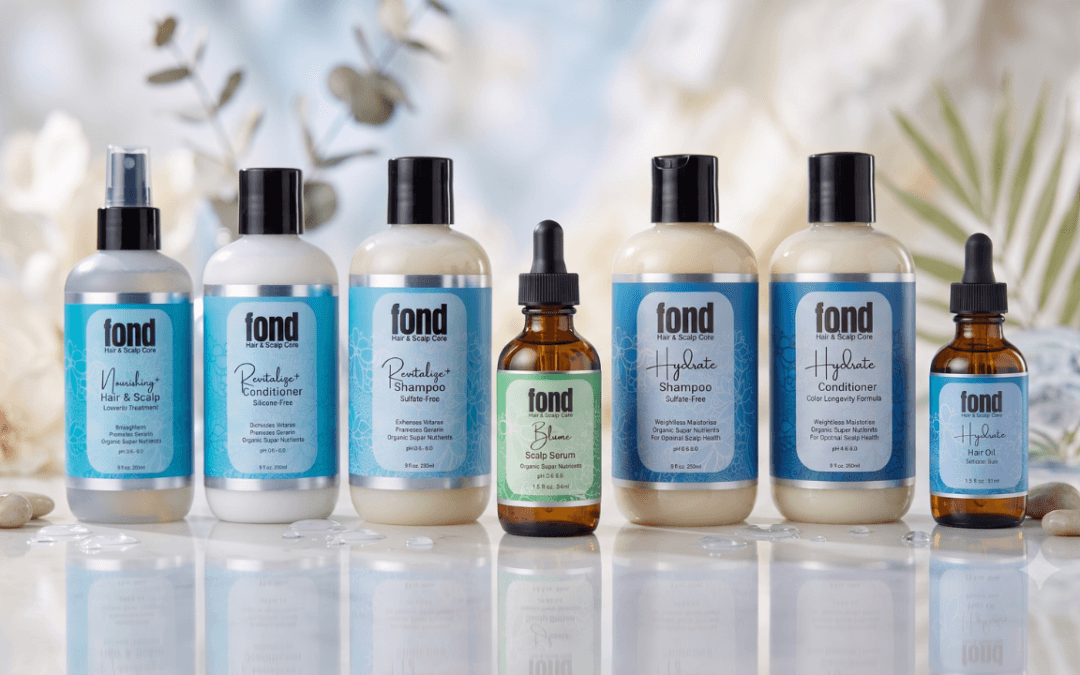
FOND Hair & Scalp Care combines gentle cleansing, botanical extracts, hydrolyzed plant proteins, scalp-supportive ingredients, lightweight conditioners, and protective polymers to support fine, thinning, fragile, color-treated, or chemically stressed hair.
FOND Revitalize+ Shampoo: Cleanse and Strengthen
FOND Revitalize+ Shampoo gently cleanses the scalp and hair without relying on harsh sulfate cleansers.
Its formula includes hydrolyzed quinoa protein, a botanical protein source containing amino-acid components that can interact with the outer hair surface. Hydrolyzed protein ingredients are commonly used to help condition fragile hair, improve body, and reinforce the feel of weakened areas.
Revitalize+ Shampoo also contains:
- Aloe vera
- Baobab
- Green tea
- Biotin
- Saw palmetto
- Lavender
- Peppermint
- Xylitol
Together, these ingredients help cleanse the scalp while supporting softness, strength, manageability, and a balanced scalp environment.
FOND Revitalize+ Conditioner: Improve Elasticity and Reduce Breakage
Following shampoo with an effective conditioner is essential because wet hair is especially vulnerable to stretching and mechanical damage.
FOND Revitalize+ Conditioner contains hydrolyzed quinoa protein, baobab, aloe vera, green tea, biotin, lavender, peppermint, saw palmetto, and lightweight conditioning agents.
It is designed to help:
- Smooth the cuticle
- Reduce combing resistance
- Improve manageability
- Support elasticity
- Minimize tangling
- Reduce breakage caused by friction
- Add fullness without heavily coating fine hair
Conditioning does not permanently reconstruct damaged keratin, but it can significantly improve how the fiber behaves during brushing, styling, and daily wear.
FOND Hydrate Shampoo and Conditioner: Moisture Recovery for Dry, Porous Hair
Hair needs more than protein alone. It also requires an appropriate balance of moisture, lubrication, and conditioning.
Too much protein without sufficient conditioning may leave some hair types feeling rigid, rough, or less flexible. FOND Hydrate Shampoo and Hydrate Conditioner are designed to support hair that feels dry, porous, color-treated, highlighted, or moisture-depleted.
Hydrate Conditioner combines botanical proteins and extracts with emollients and conditioning ingredients that help improve slip, softness, and flexibility. This makes it especially useful when the hair requires both reinforcement and moisture recovery.
FOND Blume Scalp Serum: Support the Environment Where Hair Begins
Strong hair begins at the scalp.
FOND Blume Scalp Serum is designed to support the scalp environment with ingredients that include:
- Hydrolyzed quinoa
- Pea sprout extract
- Rosemary extract
- Coffee seed oil
- Mongongo oil
- Saw palmetto
- Biotin
- Copper gluconate
- Zinc gluconate
- Magnesium aspartate
- Aloe vera
The lightweight serum helps condition the scalp without creating a heavy or greasy finish. Its combination of botanical extracts, minerals, humectants, and amino-acid-containing plant protein supports scalp hydration and provides a healthier foundation for fuller, stronger-looking hair.
Blume does not replace adequate nutrition or medical treatment for hair loss. Its role is to complement a consistent scalp-care routine.
FOND Nourishing+ Leave-In Treatment: Daily Protection and Lightweight Conditioning
Even well-conditioned hair can become damaged between wash days through heat styling, brushing, sun exposure, dryness, friction, and environmental stress.
FOND Nourishing+ Leave-In Hair and Scalp Treatment contains hydrolyzed quinoa, rice, and baobab proteins along with aloe vera, green tea, biotin, lavender, and lightweight conditioning polymers.
It helps:
- Detangle fragile hair
- Reduce friction during brushing
- Improve softness and manageability
- Support moisture retention
- Protect porous areas
- Minimize mechanical breakage
- Provide lightweight daily conditioning
- Prepare hair for styling
For fine or thinning hair, leave-in protection is especially valuable because these hair types may become weighed down by heavy oils, waxes, or rich conditioning creams. Nourishing+ is formulated to provide protection while preserving movement and volume.
A Natural Weekly Hair-Strengthening Routine
On Wash Day
- Saturate the hair thoroughly with lukewarm water.
- Apply FOND Revitalize+ Shampoo primarily to the scalp.
- Massage gently with the fingertips rather than scratching with the nails.
- Rinse thoroughly.
- Apply Revitalize+ Conditioner through the mid-lengths and ends.
- Use Hydrate Conditioner when the hair requires additional softness, slip, or moisture recovery.
- Rinse carefully without pulling or twisting the hair.
- Apply Blume Scalp Serum directly to the scalp.
- Massage gently to distribute the serum.
- Apply Nourishing+ Leave-In Treatment through damp hair.
- Detangle from the ends upward using a wide-tooth comb.
- Air-dry or use controlled heat with minimal tension.
Between Wash Days
- Apply Blume consistently as directed.
- Use Nourishing+ when the hair needs added moisture or detangling support.
- Avoid tight hairstyles that create prolonged tension.
- Sleep on a smooth pillowcase or protect the hair at night.
- Limit repeated high-temperature styling.
- Avoid brushing aggressively when the hair is wet.
- Trim severely split ends before they continue traveling upward.
Protein-Moisture Balance Matters
Protein treatments are most useful when hair feels:
- Weak
- Overly stretchy
- Porous
- Limp
- Chemically compromised
- Prone to snapping
- Unable to maintain style or structure
Additional moisture and conditioning may be needed when hair feels:
- Dry
- Rigid
- Rough
- Tangled
- Brittle
- Difficult to comb
- Less flexible after repeated protein use
The goal is not to apply the maximum possible amount of protein. The goal is to maintain a functional balance between strength, hydration, elasticity, and lubrication.
FOND’s Revitalize+, Hydrate, Blume, and Nourishing+ products can be customized within a routine based on the hair’s density, porosity, chemical history, moisture level, and degree of damage.
When Hair Changes Require Professional Evaluation
Topical products and a healthy diet can improve the condition and appearance of the hair, but sudden or persistent shedding may require professional evaluation.
Consult a qualified healthcare professional when hair loss is:
- Sudden or severe
- Occurring in patches
- Accompanied by scalp pain or inflammation
- Associated with unexplained fatigue
- Present after significant illness
- Continuing for several months
- Accompanied by major dietary restriction
- Associated with suspected thyroid, hormonal, autoimmune, or nutritional concerns
A clinician may evaluate potential contributors such as iron status, thyroid function, medication effects, illness, hormonal changes, or inadequate nutrient intake.
Supplements should not automatically be taken simply because hair is shedding. Nutritional reviews caution that excessive supplementation can sometimes be counterproductive, particularly when no deficiency has been established.
Conclusion: Strengthen Hair from the Inside and Protect It from the Outside
Hair strength is influenced by both internal nutrition and external care.
A nutrient-dense diet that supplies adequate protein and a diverse range of amino acids gives the follicle the nutritional building blocks required to produce healthy hair. Meanwhile, topical botanical proteins, conditioners, scalp serums, and protective leave-in treatments help care for the hair that has already emerged.
Combining a nutrient-dense diet rich in amino acids with FOND topical botanicals and protein treatments can help strengthen hair, reduce breakage, support the follicle and scalp environment, and improve overall scalp and hair health over time.
For a complete amino-acid-supportive hair-care routine, use:
- FOND Revitalize+ Shampoo to cleanse and strengthen
- FOND Revitalize+ Conditioner to condition and support elasticity
- FOND Hydrate Shampoo and Conditioner for moisture recovery
- FOND Blume Scalp Serum to support a balanced scalp environment
- FOND Nourishing+ Leave-In Treatment for daily protection and lightweight conditioning
The strongest results come from consistency: nourish the body, care for the scalp, protect the hair fiber, and reduce the everyday sources of damage that lead to breakage.